
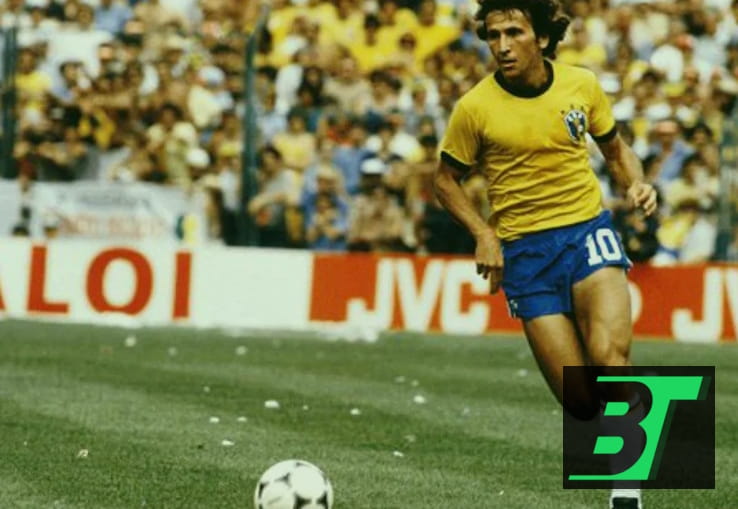
A detailed article about Zico, the Brazilian legend known for his technique, vision, and influence on attacking football.
Arthur Antunes Coimbra, known worldwide as Zico, was born in Rio de Janeiro in 1953. Growing up in a football passionate country, he developed his skills in the streets and small pitches where creativity and quick thinking were essential. Unlike many players of his era, Zico was not physically strong in his early years. However, through dedication and training, he transformed himself into a complete footballer. His technique, balance, and understanding of the game became his defining strengths from a very young age.
Zico spent the majority of his career at Flamengo, where he became a symbol of the club. He joined the first team in the early 1970s and quickly established himself as a key player. His ability to control matches, score goals, and create opportunities made him one of the most important figures in Brazilian football. With Flamengo, Zico won multiple league titles and the Copa Libertadores in 1981. In the same year, Flamengo defeated Liverpool in the Intercontinental Cup, with Zico delivering an outstanding performance that confirmed his world class status.
Zico was known for his exceptional technical ability and intelligence on the pitch. He combined precise passing with creative movement, allowing him to dictate the rhythm of a game. His free kick technique was among the best in football history, often scoring from difficult angles with accuracy and control. Zico also had a strong scoring record for an attacking midfielder, consistently contributing goals while maintaining his role as a playmaker. His vision allowed him to see opportunities that others could not, making him a constant threat to opposing defenses.
Zico represented Brazil during one of the most talented periods in the national team history. He played in the 1978, 1982, and 1986 World Cups. The 1982 tournament in Spain is often remembered for the brilliance of the Brazilian team, which included players like Socrates and Falcao. Although Brazil did not win the tournament, their style of play left a lasting impression on football fans. Zico was central to this team, providing creativity, leadership, and goals. His performances showed the beauty of attacking football, even without winning the trophy.
In 1983, Zico moved to Udinese in Italy, bringing his talents to Serie A. Despite playing for a smaller club compared to the traditional giants, he quickly became one of the most exciting players in the league. His technical ability and goal scoring made him a standout performer. Fans in Italy appreciated his style and creativity, and he became a respected figure in European football. His time in Italy further strengthened his reputation as one of the greatest players of his generation.
After returning to Brazil, Zico later moved to Japan, where he played for Kashima Antlers. His presence had a major impact on the development of football in the country. He helped raise the level of the league and inspired young players to improve their skills. Zico later became a coach and continued to influence football in Japan, contributing to the growth of the sport in Asia. His role went beyond playing, as he helped build a foundation for future generations.
Zico is widely regarded as one of the greatest players never to win a World Cup. Despite this, his influence on football is undeniable. He represented creativity, intelligence, and technical excellence. His style inspired many attacking midfielders who followed, showing that football could be played with both effectiveness and beauty. Zico contributions to Flamengo, Brazil, and international football ensure that his name remains among the greatest in history.
Zico career is a story of skill, dedication, and influence. From the streets of Rio de Janeiro to the biggest stages in world football, he demonstrated what it means to play with creativity and intelligence. His legacy continues to inspire players and fans, proving that true greatness is measured not only by trophies but by the impact left on the game itself.