
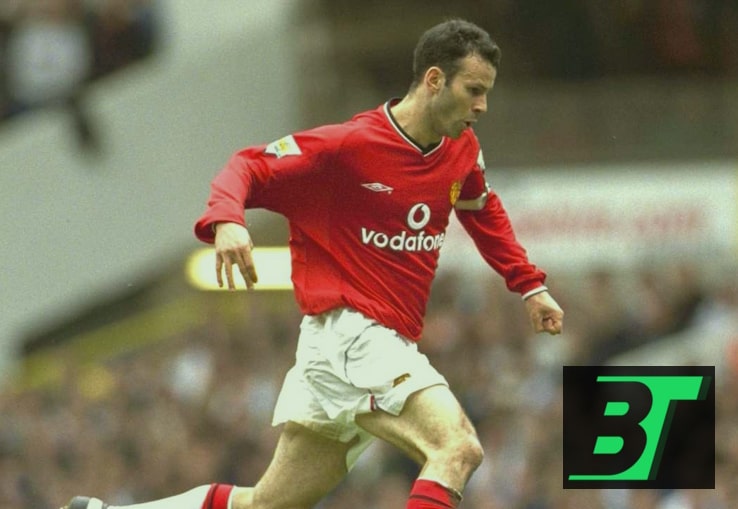
A full article about Ryan Giggs, the Manchester United legend known for longevity, consistency, and brilliance on the wing.
Ryan Giggs was born in Cardiff in 1973. His family moved to Manchester during his childhood, a change that shaped his future in football. From an early age, Giggs displayed exceptional athleticism and technical ability. His speed, balance, and natural flair made him stand out in youth competitions. He joined Manchester City’s youth setup initially, but Sir Alex Ferguson recognized his talent and convinced him to join Manchester United’s academy. This decision marked the beginning of one of the greatest careers in English football history.
Giggs made his first-team debut for Manchester United in 1991, at just seventeen years old. His dribbling skills, pace, and ability to glide past defenders quickly earned him attention. By the early 1990s, he became a regular starter, forming part of the emerging Class of '92 alongside Paul Scholes, David Beckham, Nicky Butt, and the Neville brothers. His performances transformed the left wing position, making him one of the most feared wide players in the Premier League.
One of Giggs’s most remarkable traits was his longevity. He played at the top level for more than two decades, adapting his playing style as he aged. Early in his career, he relied on explosive pace and sharp dribbling. In later years, he transitioned into a more central role, using experience, vision, and intelligence to control games. Over his long career, Giggs helped Manchester United win thirteen Premier League titles, an unmatched record for any player. His consistency and professionalism allowed him to remain relevant and impactful through multiple team eras.
Giggs delivered countless memorable moments, but few are as iconic as his solo goal against Arsenal in the 1999 FA Cup semifinal. Picking up the ball near midfield, he dribbled past several defenders before firing a powerful shot into the roof of the net. This goal became a symbol of Manchester United’s determination during their treble-winning season. Throughout his career, Giggs produced big moments in the Premier League, Champions League, and domestic competitions, often providing crucial assists or stepping up in decisive matches.
Giggs played a significant role in Manchester United’s international achievements as well. He was integral to their Champions League triumphs in 1999 and 2008. His composure, adaptability, and tactical intelligence made him an essential part of Ferguson’s European strategies. Whether attacking from wide positions or controlling tempo in midfield, Giggs’s presence strengthened the team’s chances in elite competitions. His record of consecutive Champions League seasons remains one of the longest in the tournament’s history.
Although Giggs never played in a major international tournament with Wales, he remained a respected and influential figure in the national team. He earned over sixty caps and often served as captain. His leadership helped guide younger Welsh talents, and his dedication to the national side continued even during demanding club seasons. Later, he returned as manager of the Welsh national team, contributing to the country’s growing football reputation.
Giggs retired from playing in 2014, having accumulated more than nine hundred appearances for Manchester United. His football intelligence made his transition to coaching natural. He served briefly as interim manager after David Moyes’s departure and later became assistant manager under Louis van Gaal. With a strong understanding of United’s traditions and tactical evolution, Giggs earned respect for his work on the training ground and his ambition to develop as a manager.
Ryan Giggs’s legacy lies in more than trophies. He represented consistency, professionalism, and adaptability across an incredibly long career. From a young, explosive winger to a veteran midfield playmaker, Giggs reinvented himself repeatedly. His influence on Manchester United’s success is immeasurable, and his achievements continue to inspire future generations. He remains one of the greatest players in Premier League history and a symbol of dedication to both club and sport.