
A detailed article about Romario, the Brazilian striker whose instinct, precision, and goals made him one of football’s greatest finishers.
Romario de Souza Faria was born in Rio de Janeiro in 1966. Growing up in the streets of Brazil, he developed his football skills in small spaces where quick thinking and sharp movements were essential. Unlike many players who relied on physical dominance, Romario built his game around intelligence, positioning, and clinical finishing. From a young age, he showed an incredible instinct for goals, always appearing in the right place at the right time.
Romario began his professional career with Vasco da Gama, where his talent quickly became impossible to ignore. His ability to score from almost any situation made him one of the most feared strikers in Brazilian football. He helped Vasco win domestic titles and established himself as one of the brightest prospects in South America. His performances soon attracted attention from European clubs looking for a natural goal scorer.
In 1988, Romario moved to PSV Eindhoven in the Netherlands, marking the beginning of his European career. At PSV, he became one of the most prolific strikers in Europe, scoring goals consistently and winning league titles. His finishing was precise, often requiring minimal touches to beat defenders and goalkeepers. He adapted quickly to European football, proving that his style could succeed outside Brazil.
Romario joined Barcelona in 1993, where he reached the peak of his career under coach Johan Cruyff. Playing in the famous Dream Team, he delivered outstanding performances and helped Barcelona win La Liga. His hat trick against Real Madrid in El Clasico remains one of the most memorable displays by a striker. Romario style was unique, he did not need many chances to score, and his composure in front of goal made him one of the most efficient forwards of his era.
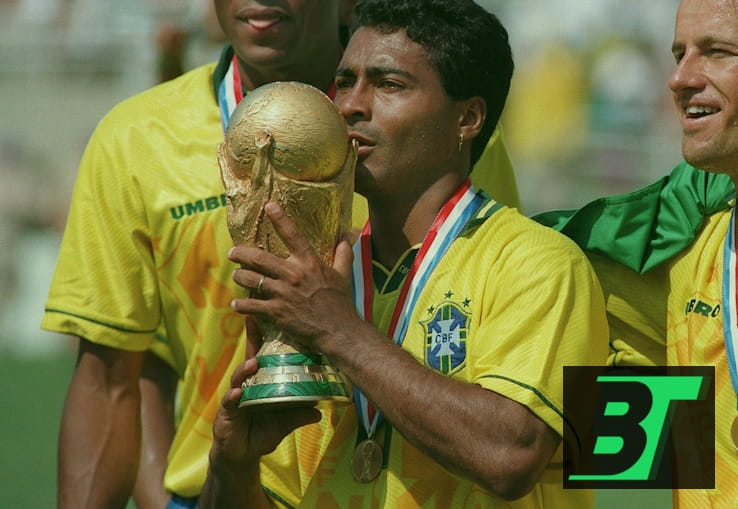
The defining moment of Romario career came during the 1994 FIFA World Cup in the United States. He was the key player for Brazil, leading the attack with confidence and precision. Romario scored crucial goals throughout the tournament and formed a strong partnership with Bebeto. His performances helped Brazil win their fourth World Cup, and he was widely regarded as the best player of the tournament. His ability to deliver under pressure confirmed his status as one of the greatest strikers in football history.
After his time in Europe, Romario returned to Brazil, where he continued to score goals at an incredible rate. He played for several clubs, including Flamengo, Fluminense, and Vasco da Gama again. Even as he aged, his instinct for goal never faded. He claimed to have scored over one thousand goals in his career, a statement that sparked debate but also highlighted his confidence and legendary status in the game.
Romario was not known for long runs or flashy dribbling. Instead, his strength was his movement inside the penalty area. He understood space better than most players and could anticipate where the ball would arrive before defenders reacted. His finishing was calm and precise, often requiring only one touch. This efficiency made him one of the most dangerous forwards ever. Many modern strikers study his positioning and decision making as a model for effective goal scoring.
Romario retired as one of the most iconic strikers in football history. After football, he entered politics in Brazil, becoming a senator and continuing to influence public life. His personality remained strong and outspoken, reflecting the confidence he showed on the pitch. His legacy is built on goals, but also on the way he approached the game with intelligence and simplicity.
Romario defined what it means to be a natural goal scorer. His career was filled with decisive moments, important goals, and unforgettable performances. From Brazil to Europe and back again, he proved that instinct and intelligence can dominate at the highest level. His name remains a symbol of pure finishing ability, and his influence continues to inspire strikers around the world.