
Explore the remarkable career of Ray Wilson, the legendary England left back who won the 1966 FIFA World Cup, starred for Huddersfield Town and Everton, and became one of the most respected defenders in English football history.
Raymond Wilson was born in Shirebrook, Derbyshire, England, in 1934. Growing up in a working-class environment, he developed an early interest in football during a period when the sport occupied an important place in British communities. His journey towards professional football was not built on extraordinary publicity or early recognition. Instead, it developed through determination, discipline, and a willingness to improve the technical and defensive aspects of his game.
Before establishing himself as a professional footballer, Wilson worked as a railway apprentice. His early experiences reflected the circumstances of many young players in postwar England, when opportunities in professional sport were limited and securing a regular income remained essential. Football eventually provided him with a different future, but his modest beginnings helped shape the personality that would define his career.
Unlike attacking players who attracted attention through spectacular goals and individual skills, Wilson developed a reputation through defensive intelligence, concentration, and reliability. These qualities would eventually make him an essential member of one of the most successful teams in English football history.
Wilson joined Huddersfield Town in the early 1950s and began developing under the guidance of Bill Shankly, who would later become one of the most influential managers in the history of Liverpool. Shankly recognised the potential of the young defender and helped him establish the discipline and tactical understanding required for professional football.
Wilson made his senior debut for Huddersfield in 1955 and gradually established himself as a regular member of the first team. Although he initially faced competition for a starting position, his performances demonstrated increasing confidence and maturity. He became particularly effective at reading attacking movements and anticipating danger before opponents could create clear opportunities.
His defensive style was based on timing rather than unnecessary aggression. Wilson rarely depended on reckless challenges or physical intimidation. Instead, he used intelligent positioning, controlled tackling, and an excellent understanding of space to neutralise attacking players.
During his years at Huddersfield Town, Wilson developed into one of the most dependable left backs in English football. His consistency attracted attention from national team selectors, and his performances eventually earned him an opportunity to represent England.
The full back position during this period required considerable defensive discipline. Tactical systems were different from those used in modern football, and defenders were generally expected to prioritise preventing opposition attacks rather than constantly joining offensive movements.
Wilson nevertheless possessed enough technical ability to support attacks when opportunities appeared. He could distribute the ball intelligently, maintain possession under pressure, and provide useful passing options along the left side. His combination of defensive reliability and technical competence made him particularly valuable.
Wilson made his England debut against Scotland in 1960 and quickly established himself as an important member of the national team. His performances demonstrated that he could compete against international attackers while maintaining the composure that had characterised his club career.
England was entering a period of significant development. The appointment of Alf Ramsey as national team manager in 1963 introduced new tactical ideas and greater emphasis on collective organisation. Wilson became an important part of the defensive structure that Ramsey developed in preparation for the 1966 World Cup.
His international career eventually included 63 appearances for England. Although he rarely attracted the same publicity as attacking teammates, his consistency made him one of the most trusted players in the national squad.
In 1964, Wilson transferred from Huddersfield Town to Everton, joining one of the leading clubs in English football. The move represented an important step in his career because Everton possessed the ambition and resources to compete regularly for major domestic honours.
At Goodison Park, Wilson quickly established himself as a key member of the defensive unit. His experience, positioning, and ability to organise the left side provided stability to a team containing several talented attacking players.
Everton supporters appreciated his professionalism and reliability. Wilson was not a defender who attempted unnecessary spectacular interventions. His greatest strength was preventing dangerous situations from developing in the first place.
His arrival also allowed him to compete in important domestic matches and experience the pressure associated with representing a club expected to challenge for trophies.
The 1965-66 season became one of the most memorable periods of the career of Ray Wilson. Everton reached the FA Cup final against Sheffield Wednesday at Wembley Stadium in May 1966.
The final developed into a dramatic encounter. Sheffield Wednesday established a 2-0 lead, placing Everton in a difficult position. However, Everton produced an extraordinary comeback, scoring three goals to secure a 3-2 victory.
Wilson played his part in a team that demonstrated determination and resilience under considerable pressure. The FA Cup triumph gave him one of the most important domestic trophies of his career and established the foundations for an even greater achievement later that summer.
Only weeks after celebrating success with Everton, Wilson would return to Wembley as a member of the England team attempting to win the World Cup.
The 1966 FIFA World Cup remains the defining chapter in the history of English international football. England hosted the tournament, and expectations were considerable. Alf Ramsey had assembled a disciplined and tactically organised squad containing players such as Bobby Moore, Gordon Banks, Bobby Charlton, Geoff Hurst, and Nobby Stiles.
Wilson occupied the left back position and became an essential component of the defensive system. England began the tournament with a goalless draw against Uruguay before defeating Mexico and France to progress from the group stage.
The knockout rounds presented increasingly difficult challenges. England defeated Argentina in the quarterfinals and Portugal in the semifinals, with Wilson contributing to a defensive unit that had conceded only one goal before reaching the final.
His performances were particularly valuable because the England system depended on defensive concentration and positional discipline. Wilson provided stability on the left side, allowing other players to fulfil their attacking responsibilities without leaving the team unnecessarily exposed.
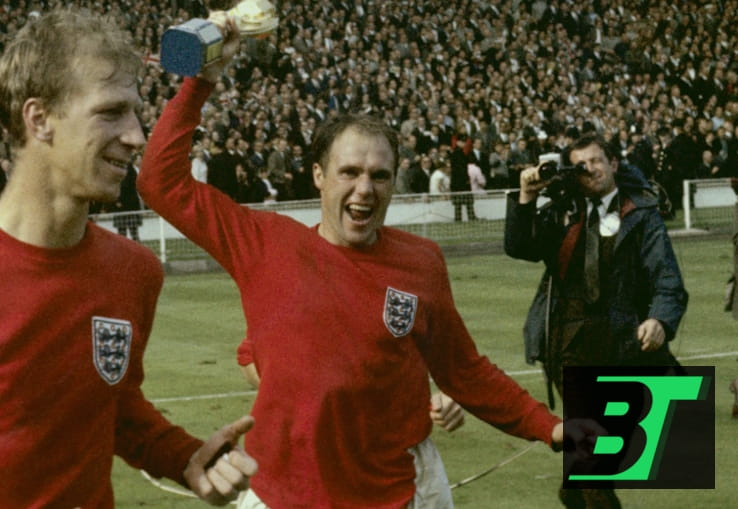
On 30 July 1966, England faced West Germany at Wembley Stadium in one of the most famous matches in football history. Wilson started at left back and played the entire contest as England secured a dramatic 4-2 victory after extra time.
The match began with an early West German goal. England responded through Geoff Hurst before Martin Peters gave the hosts the lead in the second half. West Germany equalised near the end of normal time, forcing the final into extra time.
Hurst subsequently scored twice more, completing a historic hat trick and securing the World Cup for England. The victory remains the only occasion on which the England senior men's national team has won the tournament.
Wilson became a world champion at the age of 31. Although the goalscorers and attacking players received much of the attention, his defensive contribution throughout the competition was essential to the success of the team.
Ray Wilson represented an era when defenders were expected to demonstrate discipline, concentration, and tactical awareness above almost everything else. His game was built around intelligent positioning and an ability to recognise danger before opponents could exploit it.
He was particularly effective in one-on-one defensive situations. Rather than rushing into tackles, Wilson preferred to maintain his balance, control the available space, and wait for the correct opportunity to challenge. This approach reduced unnecessary risks and allowed him to defend effectively against fast and technically gifted wingers.
His passing was also reliable. Wilson understood the importance of retaining possession after winning the ball and frequently selected sensible options rather than attempting unnecessarily ambitious passes.
While modern full backs are often evaluated according to goals, assists, and attacking statistics, the qualities that defined Wilson were different. His contribution was measured through defensive stability, tactical discipline, and the confidence he provided to teammates.
Following the World Cup triumph, Wilson continued representing Everton. However, injuries increasingly affected his ability to maintain the same level of performance that had characterised his earlier career.
He remained an experienced and respected figure at Goodison Park before eventually leaving the club in 1969. Wilson subsequently joined Bradford City, where he spent the final stage of his professional playing career.
He retired from football in 1969, bringing an end to a career that had included major domestic success, more than a decade of professional competition, and the greatest international achievement available to an English footballer.
Unlike many modern football stars who remain permanently involved in the sport through television, management, or commercial activities, Wilson followed a relatively private path after retirement.
He established a funeral business in Huddersfield and became known for maintaining a modest lifestyle despite his extraordinary achievements. His decision reflected a generation of footballers whose financial circumstances and public profiles were considerably different from those of modern international stars.
Wilson continued to receive recognition for his contribution to English football, particularly during anniversaries of the 1966 World Cup triumph. He was appointed a Member of the Order of the British Empire in 2000, acknowledging his achievements and service to the sport.
He died in 2018 at the age of 83, leaving behind a legacy closely connected with one of the most celebrated moments in British sporting history.
Ray Wilson remains one of the most important left backs in the history of English football. His achievements include winning the 1966 FIFA World Cup with England and the FA Cup with Everton during the same remarkable year.
His career demonstrates the importance of defensive excellence within successful teams. While attacking players often dominate historical discussions because of their goals and spectacular individual moments, defenders such as Wilson provide the organisation and security required for collective success.
Wilson was an essential member of the England team that achieved the greatest result in the history of the national side. His partnership with other defensive players helped establish the tactical foundation upon which the World Cup victory was built.
He also remains an important figure in the histories of Huddersfield Town and Everton. At Huddersfield, he developed from a promising young player into an England international. At Everton, he achieved domestic glory before becoming a world champion.
The career of Ray Wilson represents dedication, consistency, professionalism, and defensive intelligence. From his modest beginnings in Derbyshire to his development at Huddersfield Town, success with Everton, and unforgettable World Cup triumph with England, he established himself as one of the finest defenders of his generation.
Wilson never depended on spectacular performances to attract attention. His greatest qualities were reliability, composure, anticipation, and an exceptional understanding of defensive responsibilities. These characteristics made him a trusted figure for both club and country.
His contribution to the 1966 World Cup remains the defining achievement of his career, but his importance extends beyond a single tournament. Ray Wilson demonstrated that great teams require defenders capable of combining individual excellence with collective discipline. His place in English football history is secure, and he will always be remembered as one of the unsung heroes of the greatest triumph achieved by the England national team.