
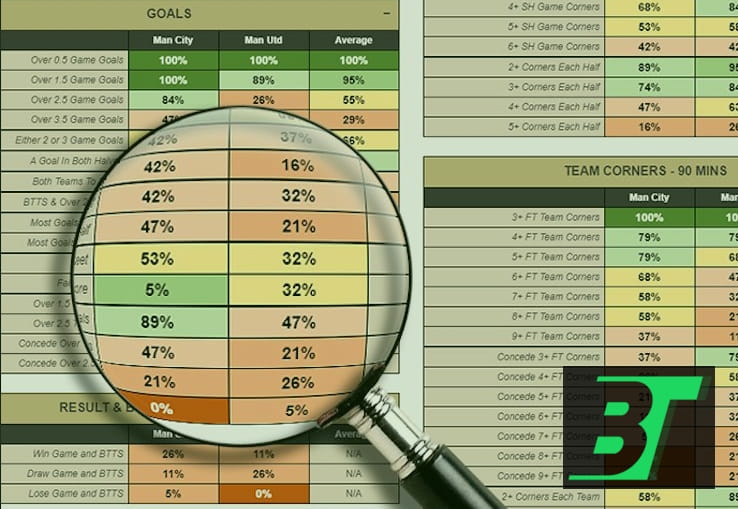
Learn which football statistics matter most before kick-off, from team form and xG to home-away trends, injuries, and tactical matchups.
When analysing an upcoming fixture, many fans rely too heavily on recent scorelines and sensational headlines to shape their expectations. However, football match outcomes are influenced heavily by randomness, especially over small samples. Judging based on just the final score allows randomness to distort your perception of a team's quality. To get closer to the real signal, you need to incorporate football statistics and context. Used properly, these data points can help you understand how a match is more likely to play out before kickoff. In this practical guide, I explain how to build smarter matchday expectations based on recent form, statistics, and context, not emotion alone.
A final score doesn't always reflect the true underlying performance in a football match. Goals are relatively rare in football, so results can be more volatile than they first appear. The better team might not win a given match: one side may take a 1–0 win while creating very little, while the other may control the game without finishing well.
Traditional scorelines carry a lot of variance and are less reliable than underlying metrics for judging sustainable performance. This is where football statistics come in. Unlike final results, metrics such as Expected Goals (xG) attempt to measure the quality of scoring chances. By looking at whether a team's style consistently generates good opportunities, these stats help you see beyond the final outcomes. They can help you judge whether a winning streak looks sustainable or fortunate, and whether a losing team’s poor results reflect weak play or simply poor finishing and variance.
To build stronger pre-match profiles while avoiding overcomplication, here’s the core set of numbers I always start with:
Football statistics become more useful when you combine them with context, including team situation and changes over time. A team’s season-long averages can be misleading if the underlying context has changed.
First, separate recent form from season-long form by looking at the last 5–6 matches, which can help highlight changes in momentum, management, tactics, or personnel that season averages may hide.
Second, compare home and away splits to see whether a team performs similarly in both settings or depends heavily on one environment. Some teams show very different home and away profiles, creating more chances at home and defending more passively away.
Third, think about injuries, suspensions, and lineup changes. Consider how missing key players may change the team’s numbers and style. Losing a top playmaker may reduce more than chance creation alone; it can also disrupt movement patterns, passing combinations, and overall attacking structure.
Lastly, consider schedule congestion and fatigue. While deeper squads may handle congestion better, shorter recovery windows can still affect performance and increase injury risk. Stats should back up expectations but come with team situational context pre-game.
Fans love to cite H2H records, believing the transitive property applies: if Team A has beaten Team B the past 3 times, they’ll win again. While head-to-head records can sometimes be useful, they should be treated as a secondary input rather than the main predictor. Use them in conjunction with current season form, tactical matchup differences, and pre-match context.
Head-to-head data is most useful when it highlights a recurring tactical issue, such as a high-pressing team consistently disrupting a possession-heavy side that creates little threat.But for those patterns to matter, the broader context must still be similar; managerial changes, different player groups, or tactical shifts can all reduce the relevance of past meetings. It’s important not to weigh the last game heavily if the squads’ styles have changed since then.
Turning football stats into stronger final pre-game expectations requires quickly filtering the data through the following evaluation steps before kickoff:
After cross-referencing those variables, you can build a clearer pre-match profile of the game. You may also want to compare that view with broader market expectations before kickoff. Whether following line movements or checking odds on platforms like 7bet sportsbook to spot discrepancies, comparing the market data against your regression-to-the-mean stat-based matchup analysis will help you see where perception vs actual nuance is off. This logical sequence keeps expectations calibrated based on data + context.
As always, even with the right data, there are misuses that lead to incorrect conclusions.
Here are some common pitfalls to avoid when using football statistics:
Before the match starts, work through these steps to build stronger pre-match expectations using the process above: